How to Clean Your AC Drain Line and Prevent Leaks
A clogged air conditioning drain line can cause big problems. It can lead to water damage and system failures. A blocked drain line can also cause expensive repairs and health risks from mold.
Regular maintenance is key to avoid these issues. This includes cleaning the drain line. In this article, we’ll show you how to ac drain line cleaning. This will help your system work well and prevent water leaks.
By following our steps, you can avoid common problems with a clogged drain line. You’ll keep your air conditioning system healthy and working right.
Understanding the Importance of AC Drain Line Cleaning
Keeping your air conditioner running well is more than just changing filters. You also need to take care of the AC drain line. This system is key for getting rid of water that the cooling process makes. If you ignore it, you could face big problems like system failures and water damage.
What is an AC Drain Line?
The AC drain line, or condensate drain line, is a crucial part of yourHVAC ma intenance service. It helps move water away from the air conditioner. This line connects to the drain pan under the evaporator coil and goes outside or to a drainage area.
Why Regular Maintenance Matters
Keeping the condensate drain line clean and maintained is key to avoiding clogs. Experts say a clogged line can make the AC unit stop working right. Regular condensate drain line repair in your maintenance routine can save you from expensive fixes later.
Common Issues Caused by Clogged Drain Lines
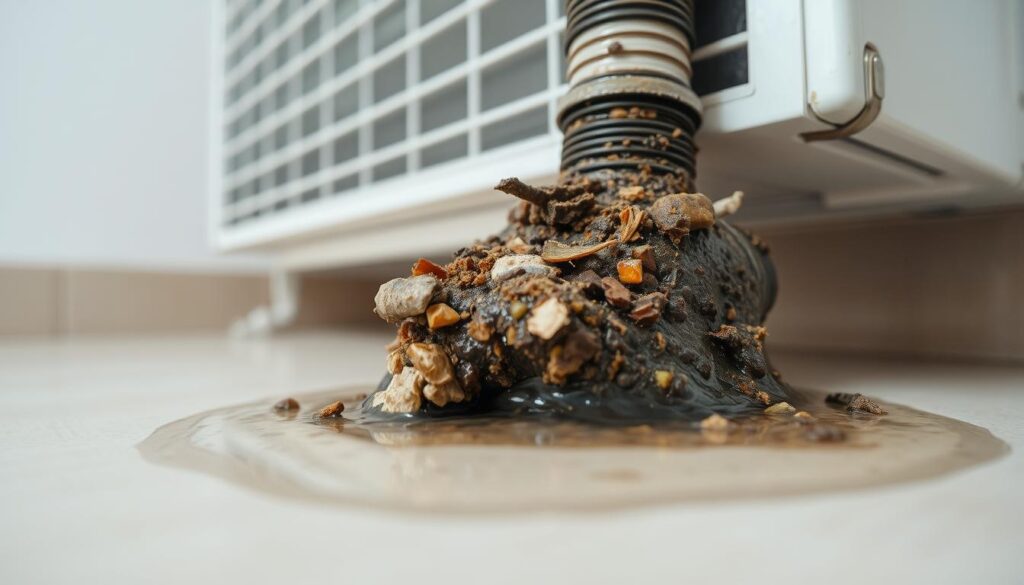
Clogged drain lines can cause many problems, like water leaks, bad smells, and too much humidity inside. If the line gets blocked, water can go back into the system. This can harm your home and even lead to mold. Regular HVAC maintenance service can spot and fix these problems before they get worse.
Signs Your AC Drain Line Needs Cleaning
Your AC drain line is key to your air conditioning system. It needs cleaning when you see certain signs. A clean drain line keeps your AC running well and your home comfortable.
Ignoring a clogged AC drain line can cause big problems. It can damage your home and make your AC work less efficiently. Regular maintenance, like reliable AC maintenance, can stop these issues.
Water Damage in Your Home
Water damage is a common sign of a clogged AC drain line. You might see water stains on ceilings or walls. Or, there could be standing water near the AC unit.
Water damage hurts your home’s look and can cause serious structural problems. Keeping your drain line clear can prevent this damage.
Unpleasant Odors from the AC Unit
Bad smells from your AC unit can mean there’s stagnant water in the drain line. This can lead to mold and bacteria growth. These smells are not only unpleasant but can also be harmful to your health.
Using a professional clogged drain solution can get rid of these smells. It clears the blockages in your drain line and stops them from coming back.
High Humidity Levels Indoors
High humidity indoors, even with your AC on, can mean a clogged drain line. When the drain line is blocked, your AC can’t dehumidify the air well.
This can make your home feel damp and encourage mold growth. Regular residential drainage cleaning helps keep humidity levels just right.
| Signs | Description | Solution |
|---|---|---|
| Water Damage | Water stains or standing water near the AC unit | Clear the clog in the drain line |
| Unpleasant Odors | Foul smells from the AC unit due to mold and bacteria | Use a professional clogged drain solution |
| High Humidity | Indoor humidity levels remain high despite AC operation | Perform residential drainage cleaning |
Tools and Materials Needed for Cleaning
To start cleaning your AC drain line, you need the right tools and cleaning solutions. This ensures a safe and effective cleaning process. Proper preparation helps avoid problems and keeps your air conditioning unit running well.
Basic Tools for the Job
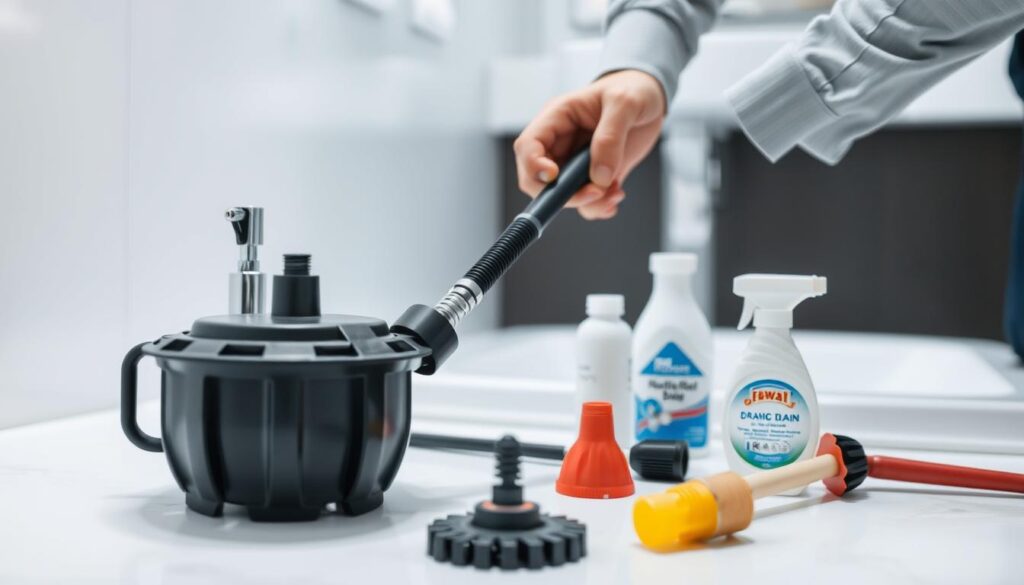
You’ll need some basic tools to clean your AC drain line. A shop vacuum or wet vac is often used by HVAC technicians. You might also need a wet/dry vacuum or a special HVAC vacuum. A brush or plumbing auger can help with tough blockages.
You’ll also need a screwdriver or wrench to get to the drain line. It’s smart to have rags or paper towels ready for spills.
Recommended Cleaning Solutions
There are several cleaning solutions you can use. Vinegar is a good choice because it’s safe and eco-friendly. Pouring vinegar into the drain line can dissolve debris. You can also use a commercial HVAC cleaning solution.
When picking a solution, think about your drain line’s material and the environment. Always follow the product’s instructions.
Safety Gear and Precautions
When cleaning your AC drain line, safety comes first. Wear gloves and safety goggles to protect yourself from splashes. Make sure the area is well-ventilated if you’re using a cleaning solution.
Be careful around electrical parts and turn off your AC unit before cleaning. If you’re not sure about the process, get help from a commercial HVAC services or HVAC maintenance service professional.
Step-by-Step Guide to Cleaning Your AC Drain Line
To keep your AC system running well, follow this guide to clean your AC drain line. It’s a simple task that needs basic tools and safety awareness.
Shutting Off the System
First, make sure to shut off your AC system. This step is key to avoid accidents. Find the circuit breaker or fuse box for your air conditioner. Turn off the power there. Check that the system is fully off before you start.
Accessing the Drain Line
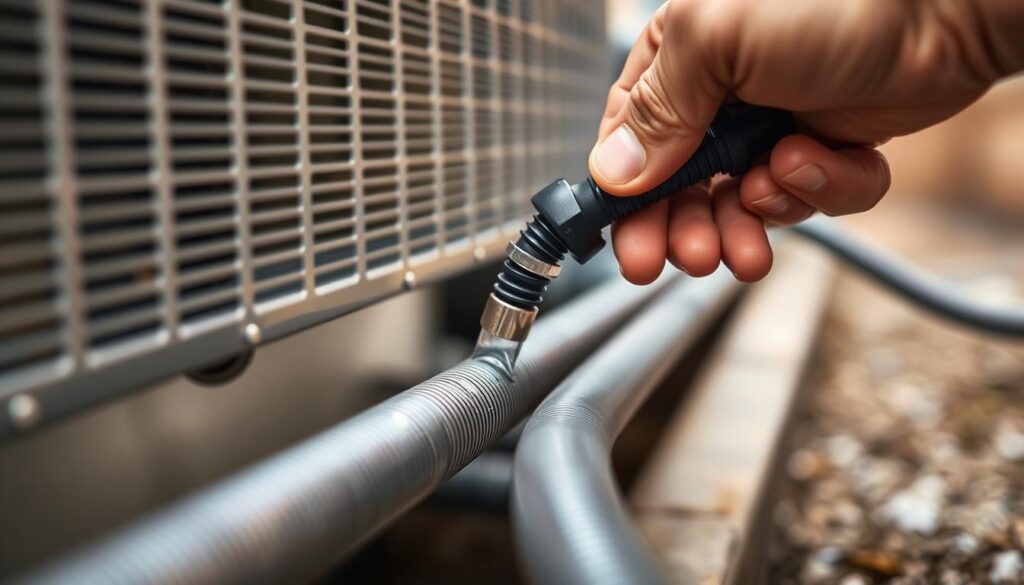
Next, you need to access the drain line. It’s usually connected to the condensate drain pan, near your air conditioner’s indoor unit. Check your AC unit’s manual to find the drain line’s exact spot in your model.
Cleaning Procedures
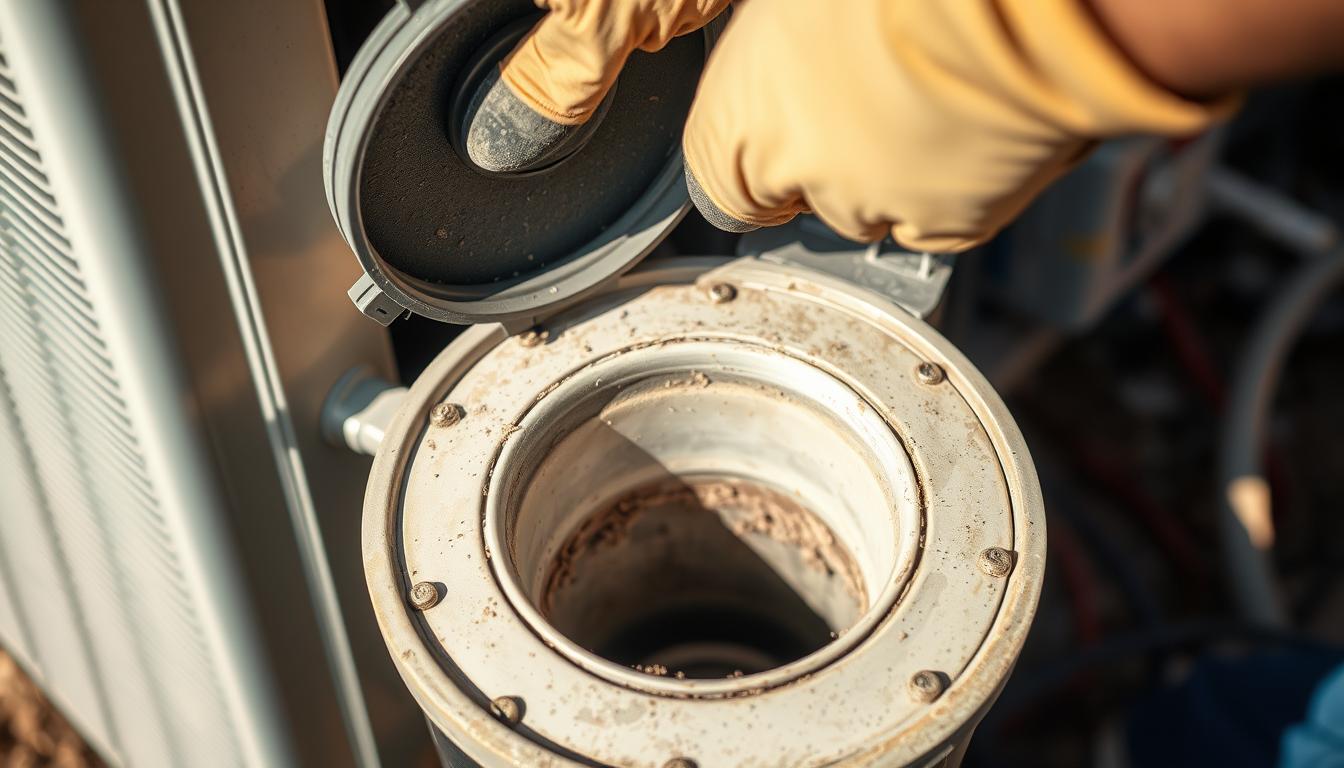
To clean the drain line, you’ll need a few tools and materials. You’ll need a wet/dry vacuum, a pipe cleaner or brush, and a cleaning solution. Here’s how to do it:
- Start by using the wet/dry vacuum to remove water from the condensate drain pan.
- Then, use the pipe cleaner or brush to clear out any clogs or debris in the drain line.
- Finally, pour the cleaning solution into the drain line to dissolve any dirt or grime left.
Testing for Proper Drainage
After cleaning, test the drain line to make sure it’s working right. Pour water into the condensate drain pan and watch how it drains. If the water flows well, you’ve cleaned it right. If not, you might need to clean it again or get professional help.
By following these steps, you can keep your AC drain line clean and working well. This helps prevent leaks and keeps your air conditioner efficient.
Tips for Preventing Clogs in the Future
Keeping your AC drain line clear is key to a smooth-running system. It’s not just about fixing problems; it’s about keeping your AC in top shape all year. By taking a few simple steps, you can prevent water leaks and keep your AC in great condition.
To do this, setting up a regular maintenance routine is vital. Here are some tips to help you avoid clogs:
Regular Maintenance Schedule
Having a set maintenance schedule is crucial for your AC’s health. This means checking the drain line often for clogs or damage.
- Inspect the drain line for blockages or damage every few months.
- Clean the drain line at least once a year, or as needed based on usage.
Using Drain Line Tablets
Drain line tablets can help prevent clogs and mold in your AC’s drain line. They break down debris and stop future buildup.
Adding drain line tablets to your maintenance routine can greatly lower clog risks.
Checking the Drain Pan
The drain pan is also important to check regularly. Make sure it’s not cracked or rusted to avoid leaks and other problems.
- Check the drain pan for any signs of damage or wear.
- Replace the drain pan if you notice any cracks or rust.
By following these tips and staying proactive with AC maintenance, you can keep your system running smoothly. This means preventing water leaks and keeping your home comfortable.
DIY vs. Hiring a Professional
Choosing between DIY and hiring a pro for AC drain line cleaning is a big decision. Each option has its pros and cons. It’s key to weigh these before deciding.
Going the DIY route can save money and feel rewarding. But, if you’re not into DIY or face a tough clog, things might get complicated.
When to Consider Professional Help
Recurring clogs or water damage in your AC drain line call for professional clogged drain solution. Experts have the tools and know-how to tackle tough problems you can’t solve.
For commercial HVAC systems, it’s wise to get pros who specialize in commercial HVAC services. They ensure the job is done right and fast, avoiding costly downtime.
“Hiring a professional to clean your AC drain line can provide peace of mind, especially if you’re unsure about how to tackle the issue or if the problem persists after attempting DIY methods.”
Cost Comparison: DIY vs. Professional Services
The cost is a big factor in choosing DIY or professional help. Here’s a look at the costs:
| Service | DIY Cost | Professional Cost |
|---|---|---|
| Cleaning Solution | $10-$30 | $0 (included in service) |
| Labor | $0 (your time) | $75-$200 |
| Total | $10-$30 | $100-$250 |
DIY is cheaper upfront, but pros offer value with their skills and the job’s quality.
In conclusion, your choice between DIY and a pro for AC drain line cleaning depends on the task’s complexity, your DIY comfort, and your budget. For complex or commercial systems, getting a pro is usually the best choice.
Frequently Asked Questions (FAQs) About AC Drain Lines
Let’s explore some common questions about AC drain lines. Knowing how your air conditioner’s drainage system works can save you time and money. It’s all about keeping your system running smoothly.
How Often Should I Clean My Drain Line?
Cleaning your AC drain line once a year is a good rule of thumb. Do it before the cooling season starts. But, if you see water damage or bad smells, clean it right away. Regular cleaning keeps your system working well.
Can I Use Vinegar to Clean My Drain Line?
Yes, vinegar is a great, eco-friendly way to clean your AC drain line. Mix equal parts water and white vinegar, then pour it in. Let it sit before rinsing with water. Vinegar’s acid breaks down debris and algae, helping prevent clogs. Using vinegar is a cost-effective and environmentally friendly way to maintain your AC drain line.
What If Water Still Isn’t Draining?
If water still doesn’t drain after cleaning, there might be a bigger problem. Check if the clog is further down or if the drain pan has issues. Sometimes, you need to call a professional to find and fix the problem. Ignoring drainage issues can lead to water damage or mold, so it’s crucial to act fast.
Understanding these common questions helps you keep your AC drain line in good shape. Regular cleaning and maintenance prevent clogs and other problems. This ensures your air conditioner works efficiently.
Conclusion and Final Reminders
Keeping your AC drain line in good shape is key for your HVAC system’s efficiency and air quality at home. By knowing why residential drainage cleaning matters and following the steps in this article, you can stop leaks and keep your system running well.
Key Takeaways
Regular upkeep is essential to avoid clogs and damage to your AC unit. A routine HVAC maintenance service helps spot issues early, preventing big problems later.
Stay Proactive
Don’t wait for trouble signs. Clean your AC drain line often and check your system regularly. This can save you from expensive repairs and keep your home comfortable.
Need Assistance?
If you’re not sure about AC drain line maintenance or need expert help, contact a skilled HVAC technician. They can offer the right advice and support to keep your system in great shape.